Retailers in their quest to automate operations over the years have developed a number of ways to keep track of products ordered, inventoried, sold and re-ordered. Stock-keeping units, or SKUs, product look ups, or PLUs, for produce, and universal product codes, or UPCs, for grocery items are just part of this alphabet soup.
For practitioners of WIC EBT, UPCs are important because they form the UPC databases that make WIC EBT possible.
But now comes word that retailers are re-looking at the number of items they carry in a store in an effort to "skinny up" their SKUs.
Walmart was the first retailer to act on this, with its "Win/Place/Show" strategy, aimed at reducing the number of items it carries by 18%.
Now smaller format stores are getting into the act, employing "SKU rationalization" to cut down the number of product lines they carry. Fewer products means lower costs.
According to one report, the number of food product lines that could be reduced across the industry does not yet include anything that would affect the WIC program.
But those of us involved in WIC EBT would be wise to monitor this retail trend, less WIC consumers show up at the store one day and not find their favorite brand of cereal or prescribed type of milk.
* * * * *
For more information on issues involving retailers and WIC register today for EBT The Next Generation, Nov. 8-10 in New Orleans. This is the only national conference devoted entirely to EBT issues with several sessions that deal with retailers and WIC. For more information or to register, click here.
Wednesday, September 30, 2009


Tuesday, September 29, 2009
The Intrepid Nine
Congratulations are in order for nine states recently awarded WIC EBT Planning grants. They are:

- Alabama
- Colorado
- Delaware
- District of Columbia
- Illinois
- Missouri
- Montana
- Oregon
- Pennsylvania
These nine states will soon embark on an exciting journey-determining the feasibility of WIC EBT for their individual states, determining what type of technology works best for them, gathering information from WIC retail vendors, local WIC agencies and others on the business processes to be incorporated in the new system, and working with the Food and Nutrition Service to develop RFPs for planning and, hopefully, for implementation.
As they walk down this road, they are walking in the footsteps of many other WIC agencies who have gone before them. States like Wyoming, one of the earliest converts to the WIC EBT concept and a proud participant in the groundbreaking Health Passport concept.

And Michigan, the state that incubated the first successful statewide online WIC EBT project. And Texas, which proved the viability of its "commercial" cost model in rolling out an offline EBT project across that vast state.
These nine states, along with the handful that are currently operating WIC EBT statewide, and the few that are in planning now, will comprise about 20% of the WIC states, territories and tribal organizations. Now WIC EBT is starting to look like something.
2010 may be the year that WIC EBT passes from an interesting concept to a battle-tested delivery system capable of nationwide deployment.
* * * * *
For more information on the current state of WIC EBT, including the search for national standards, interfacing with legacy systems, and evaluating online and offline technology, make plans to attend EBT The Next Generation Nov. 8-10 in New Orleans. For more information, or to register for the conference, click here.
Monday, September 28, 2009
Farmers Markets
A group called Farmers Markets Today just released its survey of farmers market operations in the U.S. The survey covered over 400 respondents, about half of them farmers, currently involved in farmers markets. The results might surprise you.
According to the survey:
Nearly 30 percent of farmers say they make between $150 and $300 at each farmers market. About 14% say they make over $600 per day.
And nearly 20% of respondents say that farmers markets account for over 90% of their total revenue.
There is no doubt that trends like nutrition education and outreach are making farmers markets more and more popular in sourcing supplies for the family table. And because of this farmers markets are becoming more and more important in EBT.

Image courtesy of the Iowa Department of Human Services
* * * * *
EBT The Next Generation offers a special bonus session on Farmers Markets, Monday October 9 at 5:15 p.m. To register for the conference, or for more information click here.
To see the results of the Farmers Markets Today survey, click here.
According to the survey:
- Over half of the farmers (52.9%) sell at more than one market each week
- Most farmers are experienced marketers--57% of those responding to the survey said they have been selling for a decade or more
- Of the markets surveyed 82% have been in business for more than 3 years, with 37% operating for more than a decade
9% of the markets are supported in some way by a state agency
Farmers markets are a local affair: 46% of them serve 500 or fewer customers
Nearly 30 percent of farmers say they make between $150 and $300 at each farmers market. About 14% say they make over $600 per day.
And nearly 20% of respondents say that farmers markets account for over 90% of their total revenue.
There is no doubt that trends like nutrition education and outreach are making farmers markets more and more popular in sourcing supplies for the family table. And because of this farmers markets are becoming more and more important in EBT.

Image courtesy of the Iowa Department of Human Services
* * * * *
EBT The Next Generation offers a special bonus session on Farmers Markets, Monday October 9 at 5:15 p.m. To register for the conference, or for more information click here.
To see the results of the Farmers Markets Today survey, click here.
Monday, September 21, 2009
The Changing Face of SNAP
Agriculture Secretary Tom Vilsack on Thursday announced that six state agencies have been awarded grants to increase participation in the SNAP program. The lucky six are:

- Massachusetts Department of Transitional Assistance
- Michigan Department of Human Services
- Ohio Department of Jobs and Family Services
- Pennsylvania Department of Public Welfare
- Wisconsin Department of Health Services
- Washington Department of Social and Health Services
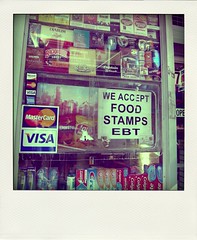
Congratulations to the agencies. They will be using to money to increase education and outreach about the program to various at-risk populations. The announcement demonstrates how much the SNAP program has changed in 20 years. We've seen it move from paper coupons to plastic cards. From a queue up at the welfare office to a smooth in-lane process at the grocery store. From a "welfare" program to a supplemental nutrition program. From an afterthought to the tip of the spear in disaster recovery.
These changes reflect the changes in the country over the past two decades such as greater emphasis on targeted programs. They also reflect a re-shaping of thought on nutrition education, beginning with the new food pyramid, and including the new WIC food package and the increasingly important role that farmers markets play in nutrition.
But many of these changes would not have been possible without the role that technology has played. This includes disaster food plans that are effective in hours, not days, and the ability for states in disparate regions to "buddy up" when one is subject to a disaster. It includes faster and more robust point of sale equipment, and the ability to issue true multi-application payment cards.
These technologies are not administrative spending gone to waste. The provide a way for states to make positive changes in the lives of people in ever increasing ways.
Posted by Bob September 21, 2009
* * * * *
For more information on how technology is helping change the face of SNAP, WIC and other programs, attend EBT The Next Generation-the only education and training conference devoted exclusively to EBT. For more information, click here.
Friday, September 18, 2009
How Do We Measure Success?
Members of the eGoverment Payments Council and the Electronic Funds Transfer Association have devoted a great deal of time over the last 18 months educating congressional and executive agency staff on the benefits of WIC EBT. Partly as a result of this effort, the American Recovery and Reinvestment Act of 2009 included WIC technology funding.
In the private sector we know when we've been successful. We know what we've invested in a project. We know the income that we've netted from that project. So we can pretty easily determine the return on that investment.
But how do we measure success in public sector investment? In other words, with a significant investment in WIC technology, how with the federal government know if it has achieved a meaningful return on that investment?

Jeff Rowe, editor of Healthcare IT News, poses that same question about the similar investment in healthcare technology that ARRA is making. He says the answers may be in a recently released report by INPUT, a Virginia-based research firm. The report, which deals with the healthcare segment, may have some clues for us on measuring the effectiveness of the investment in WIC technology.
Accurate metrics demonstrate the true value of programs like WIC. Developing an assessment methodology that demonstrates positive ROI can also make it easier to to justify increased spending in the future.
At this year's NextGeneration conference, Roundtable 2 will provide a forum for the EBT community to discuss Current Topics in WIC EBT. The topic of measuring success in WIC EBT would certainly fit into that discussion.
posted by Bob September 18 8:36 a.m.
* * * * *
EBT The Next Generation will be held November 8-10 at the Inter Continental Hotel in New Orleans. To register, click here.
In the private sector we know when we've been successful. We know what we've invested in a project. We know the income that we've netted from that project. So we can pretty easily determine the return on that investment.
But how do we measure success in public sector investment? In other words, with a significant investment in WIC technology, how with the federal government know if it has achieved a meaningful return on that investment?
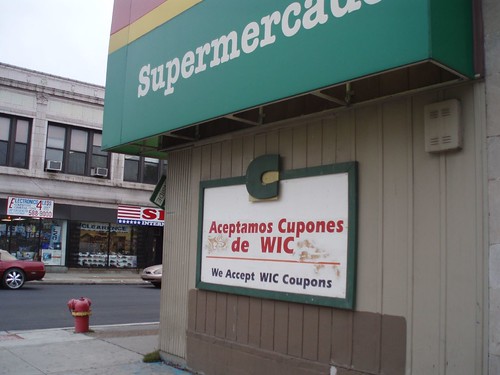
Jeff Rowe, editor of Healthcare IT News, poses that same question about the similar investment in healthcare technology that ARRA is making. He says the answers may be in a recently released report by INPUT, a Virginia-based research firm. The report, which deals with the healthcare segment, may have some clues for us on measuring the effectiveness of the investment in WIC technology.
Accurate metrics demonstrate the true value of programs like WIC. Developing an assessment methodology that demonstrates positive ROI can also make it easier to to justify increased spending in the future.
At this year's NextGeneration conference, Roundtable 2 will provide a forum for the EBT community to discuss Current Topics in WIC EBT. The topic of measuring success in WIC EBT would certainly fit into that discussion.
posted by Bob September 18 8:36 a.m.
* * * * *
EBT The Next Generation will be held November 8-10 at the Inter Continental Hotel in New Orleans. To register, click here.
Subscribe to:
Posts (Atom)